Custom codec engineering
Encoders and decoders designed from your requirements up, tuned for the hardware and links you actually run on.

Custom codec engineering
We design, build, and validate custom video codecs around your hardware, bandwidth, latency, network conditions, and licensing exposure. Now extending into AI and data compression.
Discuss your requirements →01 · What we do
Off-the-shelf codecs are built for someone else's problem. We design, build, and validate codecs around yours, and redesign existing ones to remove patent risk.
Encoders and decoders designed from your requirements up, tuned for the hardware and links you actually run on.
We redesign existing codecs to work around patent-encumbered tools, reducing exposure to patent claims.
We're extending the same engineering to other compression problems, including AI and data infrastructure.
02 · Industries
We serve teams that need data to move or store efficiently, wherever they operate.
Video from constrained hardware over constrained links.
Video that stays usable when networks degrade.
Efficient delivery with licensing exposure designed out.
Deep technical knowledge of codec internals and the patent landscape.
Compression for large-scale AI and data center workloads.
We work with customers around the world.
03 · Why Atlas
Our engineers work on compression internals, starting with video codecs.
We design around patent-encumbered tools from the start.
Your requirements shape the solution, not the other way around.
04 · Featured project
We are developing an error-resilient encoder and decoder for a real-time video transport platform, so video stays usable on unreliable links.
05 · Our story
Atlas Compression was founded by a video and streaming engineer and an entrepreneur who has worked with and helped many companies in tech.
The engineer has spent years inside codecs and saw companies stuck with ones that were built for someone else, exposed to patent claims, and hard to change. The entrepreneur has seen how companies succeed and fail, and knows which risks are worth taking. Together, we build compression designed around what each client actually needs.
Co-founder
Co-founder
06 · Advisory board
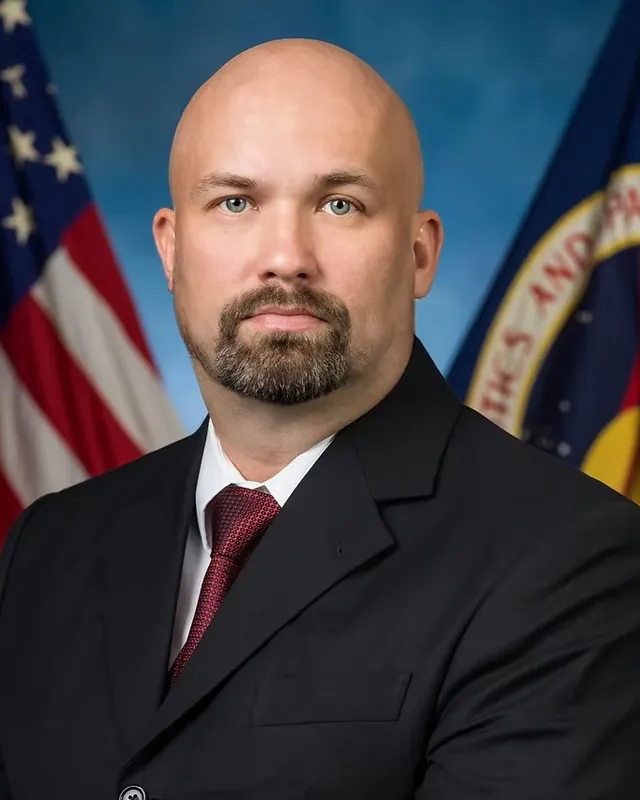
Advisor
Kimmo Nieminen brings over 30 years of expertise in science, space, subsea, and military operations, specializing in NASA’s Extravehicular Activity (spacewalks) for the Lunar Program, supporting the Astronaut Office.
A distinguished member of the elite Finnish Navy Special Forces (SUKK 62) under U.S. Navy SEAL command, he later led deep-submergence vehicle programs for scientific research. As Chief of Mission Control, he directed the Global Stratospheric Flight Operations Program, held executive and board-level roles, and managed $100M+ international programs. As President, he pioneered a bioscience company, revolutionizing biochemical spectrum diagnostics through AI-driven medical imaging. With degrees in Electronic and Electrical Engineering, Robotics, and Ph.D. studies in Physics, Mr. Nieminen has received 17 NASA awards for contributions to the Space Shuttle, Hubble, ISS, Space Suit, and Artemis III programs. Recognized as a global expert in space and subsea operations, he continues to drive advancements in these fields.

Advisor
Paritosh Pathak is a technology executive and entrepreneur with deep experience in technology strategy, mergers and acquisitions, and private equity due diligence.
As CIO of Beyond Finance, he helped grow the company into the nation’s leading debt settlement firm, with $15 billion in total debt settled. He co-founded Eagle Vision Communications, whose technology supported loss mitigation across a $10 billion mortgage loan portfolio and which was later acquired by Fidelity National Information Services (NYSE: FIS). Earlier in his career, he was a key technology leader at Litton Loan Servicing, which was subsequently acquired by Goldman Sachs. Paritosh has taken part in hundreds of private equity due diligence engagements and numerous successful acquisitions, with a practical focus on technology assessment, business scalability and value creation. He has guided businesses through growth toward market leadership, bridging technical innovation and commercial success. He co-authored Administering SQL Server 7.0, published by McGraw-Hill, and previously served as President of the Data Warehousing Special Interest Group within the Professional Association for SQL Server. Paritosh holds a Bachelor of Engineering degree from Bangalore University and pursued graduate engineering studies at Texas Tech University.

Advisor
Cody Nicholson is a seasoned investor and dealmaker and Managing Director of Helium Capital, a firm that has acquired 14 companies in the past two years and has $60MM in assets under management.
Previously, he served as Managing Director of the Trinity Communities Group Equity Fund II, focused on a $274MM portfolio of multifamily assets across the Southeast United States. As a fractional CFO, Cody leads FP&A, M&A, deal structuring, and debt and equity raises. His expertise spans private enterprise acquisition, financial consulting, and real estate syndication. A committed educator, Cody teaches in Rice University’s enterprise acquisition lab and chairs the business school’s real estate entrepreneurship roundtable. He holds an MBA in finance from Rice University and an undergraduate degree in mechanical engineering, with a focus in renewable energy, from Texas A&M University.
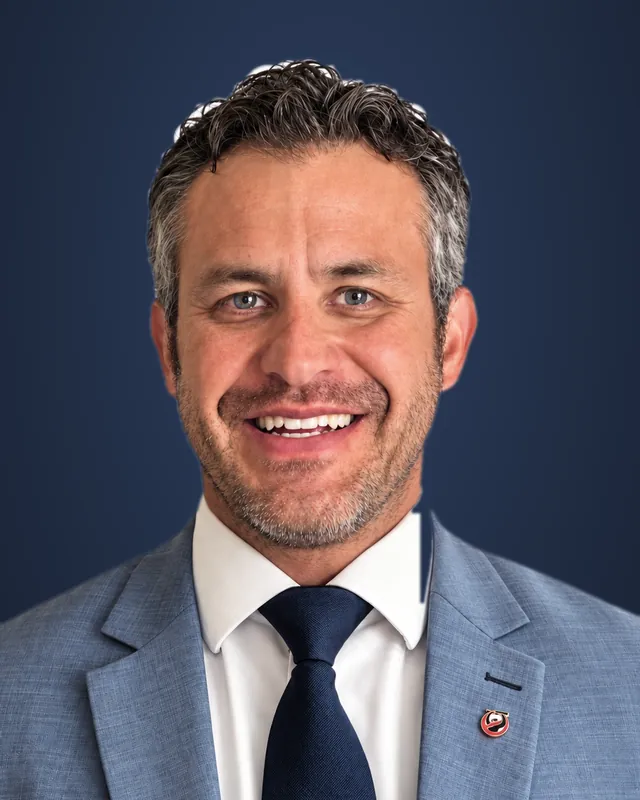
Advisor
Adrian Medina brings 23 years of military intelligence experience in special operations, where technology often made the difference between success and failure.
He served as a counterintelligence and human intelligence officer with Naval Special Warfare. He deployed with SEAL Teams ONE, THREE and SEVEN and Special Reconnaissance Team ONE, with repeated combat and operational tours in Iraq, Afghanistan, the Middle East and South Asia. At Naval Special Warfare Command, Adrian led the adoption of new technology across the entire NSW intelligence community, which includes eight SEAL Teams, three Special Boat Teams, two SEAL Delivery Vehicle Teams and two Special Reconnaissance Teams. He managed the command’s Data Science Team, built new data processing workflows and created two machine learning dashboards for targeting and intelligence analysis. He also oversaw program of record systems including unmanned aerial and underwater vehicles and biometrics, and he ran the command’s Open-Source Intelligence program. Earlier in his career, Adrian used platforms such as Palantir, ArcGIS and Analyst Notebook, along with forensic exploitation of phones, computers and biometric data, to support more than 100 successful operations. As the senior U.S. enlisted leader at the NATO Intelligence Fusion Centre, he coordinated counterterrorism intelligence sharing among allied nations. He also taught interagency leadership and collaboration at the CIA’s National Collaboration Development Center. His work covers cyber security, signals and geospatial intelligence, threat finance and technical surveillance. His awards include the Defense Meritorious Service Medal, the Joint Commendation Medal and the Combat Action Ribbon for Iraq and Afghanistan. Adrian holds a B.S. in Organizational Leadership from the University of Charleston. He brings the board a practitioner’s view of how technology is built, tested and trusted in high-stakes environments.

Advisor
Joseph P. Havlicek is Gerald Tuma Presidential Professor and Williams Companies Foundation Presidential Professor of Electrical & Computer Engineering at the University of Oklahoma, with major successes in video compression, hardware-software co-design, and real-time systems.
He also has a proven track record of leading teams in the implementation of sophisticated mathematics into successful deployment systems. This foundation began with his role as a software engineer with Management Systems Laboratories (1984 to 1987) in Blacksburg, Virginia, where he developed critical decision support software for U.S. Department of Energy nuclear materials management. He then spent a decade with the United States Naval Research Laboratory (1987 to 1997) in Washington, DC, focusing on research and development of infrared missile warning receivers for Navy aircraft, including the Navy’s first two-color infrared system. He was a member of the elite team that developed the prototype for the production AN/AAQ-45 Distributed Aperture Infrared Countermeasure System, currently deployed on U.S. Navy, Marine, and Air Force helicopters worldwide, and he received the Department of the Navy Award of Merit for Group Achievement for this work. He was also a programmer-analyst with IBM in Austin, TX, where he developed image compression CODECs and firmware for IBM’s pioneering multimedia hardware and digital signal processing platforms. Since joining the University of Oklahoma faculty in 1997, he has been PI or co-PI on more than 110 externally funded grants and contracts, securing a total of over $27M in external research funding. He is co-founder and director of the OU Center for Intelligent Transportation Systems, where he has supervised engineering teams that designed, developed, and implemented the Oklahoma statewide Intelligent Transportation System, including a distributed fault-tolerant video network covering major roadways across the entire State of Oklahoma. Under his leadership, the center partnered with the Oklahoma Department of Transportation to originate and pioneer the Virtual Traffic Management Center architectural concept, which FHWA subsequently adopted as a national implementation guideline and which has since served as a nationwide blueprint for decentralized traffic management networks. An internationally recognized authority in video and image processing, target tracking, medical image processing, and intelligent transportation systems, Dr. Havlicek has authored or co-authored over 130 scholarly publications in these areas. He has been called upon to provide expert testimony in these areas before U.S. District Courts, the U.S. International Trade Commission (ITC), the United States Patent Trial and Appeal Board (PTAB), and the German Federal Patent Court. He is a senior member of the IEEE. He was a Senior Area Editor of IEEE Transactions on Image Processing for three years after serving as Associate Editor for five years, and he is a past Associate Editor of IEEE Transactions on Industrial Informatics. He served as Publications Chair on the Organizing Committee of the 2007 IEEE International Conference on Image Processing (ICIP), as a Technical Area Chair for ICIP 2012 and ICIP 2013, and as a Technical Area Chair for the IEEE International Conference on Acoustics, Speech, and Signal Processing (ICASSP) in 2012 and 2013. He has been a member of the Technical Program Committee and Organizing Committee of the IEEE Southwest Symposium on Image Analysis and Interpretation since 1998, serving as General Co-Chair (2010), Technical Program Co-Chair (2004, 2006, 2008), and Publicity Chair (2000, 2002). He was chairman of the Electrical and Computer Engineering Graduate Studies Committee at the University of Oklahoma from 2008 to 2013 and chairman of the Undergraduate Studies Committee from 2021 to 2023. Dr. Havlicek received the B.S. and M.S. degrees in Electrical Engineering from Virginia Tech, Blacksburg, VA, and the Ph.D. degree in Electrical and Computer Engineering from the University of Texas at Austin. He is a member of Tau Beta Pi, Phi Kappa Phi, and Eta Kappa Nu.
Tell us your constraints. We'll tell you what's possible.
info@atlascompression.com